

Why Beauty Is Genius

Why Beauty Is GeniusOnce Geniusbeauty was asked:
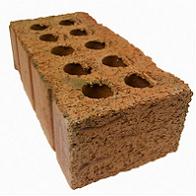
- Why are you called Geniusbeauty? I see you’re beautiful, but why “Genius“? I’ve got a riddle for you, so if you solve it, you will prove me, that you are the real Geniusbeauty. Here is a heap of bricks. I’ll give you a slide rule and you will have to measure the diagonal of the brick. But remember, that you can measure it only once!

In the end she proved, that she was not only beautiful, but also smart. How did she do this? What did she answer?

Please, if you want to find the solution yourself, do not look at the comments of this post, because someone could have already written it there. You will find the solution in the next brain game. You are always welcome to ask questions about the task, in case something is not clear. But sorry, I will not answer leading questions. Good luck!

The answer to the previous brain game is:

4 9 2
3 5 7
8 1 6

Every row, column and diagonal is 15. If you rotate the grid, the logic stays the same. For those, who would like to find out the logic in detail, here is the link: http://en.wikipedia.org/wiki/Magic_square.
Congratulations to those, who solved it: Stargoat, Chris, Steve, Hj, Laurentiu Craciunas, Jed Hawk! Many thanks to Jed Hawk for the detailed explanation.




Other News

8 Responses to “Why Beauty Is Genius”

    1. Chris says:

      Hi Geniusbeauty I e-mailed you what I believe is the correct answer. Interesting little puzzle.

    2. Dwight says:

      Here’s my solution – you don’t need to post this, but I didn’t see
      a link to email you rather than posting.

      I assume by “heap” that there are at least three bricks. Create a
      “mini-step” by putting one brick in front of you, and stacking two
      bricks directly in back of it. Now measure from the top-front-left
      corner of the first brick to the top-right-back corner of the top brick
      of the two in the back. Essentially you are measuring the diagonal
      of where a fourth brick would be if you had created two stacks of two bricks.

      Alternate solution: If “measure once” means you are only allowed to use
      the rule once (position it once), but can read off multiple numbers, there’s
      another solution. Position three bricks next to each as in this ASCII diagram
      (hopefully this won’t get clobbered in transmission), but without any gaps
      between bricks. Basically from the width of the edge facing you
      is different for each brick.

      |—| |—–|
      | | | |
      ———- | | | |
      | | | | | |
      ———- |—| |—–|

      Now place the ruler across the bottom, reading the numbers where each
      brick ends. You can now compute the length of each edge, and use
      the Pythagorean theorem to compute the diagonal. This isn’t as nice
      a solution. Even though you’re placing the ruler once, reading
      three numbers violates the spirit of “using” it once.

    3. darius says:

      measure it from corner to corner. Unless you want to use a worthless formula. That was easy.

    4. Dwight says:

      And how, darius, do you get the ruler through the brick to do that
      measurement? Diagonal in this problem means front-left-top corner
      to rear-right-back corner (or one of the other three equivalents), not
      the diagonal of a face.

    5. Jed Hawk says:

      I’m thinking of using mirrors but can’t quite come up with what I want.
      Mathematically, if the brick has dimensions L, B and H. Then the length of the true diagonal is:
      sqrt(L^2 + B^2 + H^2).
      I need some way to organise the mirrors in a single plane, possibly on the same parallel plane as the base of the brick, that allows me to measure one line only.

      Maybe, since the flat diagonal = L^2 + B^2 I could line that up against the H side, somehow. Thus only need the mirror for the Height of the brick but argh, I could be wrong anyway.

    6. Dwight says:

      Want a hint Jed? If not, stop reading.

      If the brick wasn’t there, you could easily measure its diagonal.

    7. Jed Hawk says:

      I didn’t read the word “heap” the first time rounds – oops, that’ll teach me. I assume that every brick is uniform then, from the same mould so to speak.

      Well in that case you can rest two bricks and measure in one straight line, by positioning the height of the second brick to extend the flat diagonal of the base of the first brick.

      A—-B
      C—-D
      E
      F

    8. This one can be done in a hard/math way and in a genius way, so here’s the genius way :)

      Get 3 bricks, put them one near another and measure the distance between the lower right corner of the left brick to the upper left corner of the right brick. This way you’ll find the diagonal of the middle brick. Here’s a quick painting: http://img137.imageshack.us/img137/8402/caramiziwd1.gif


Leave a Reply


Related Articles

© 2007 - 2012 Geniusbeauty.com. Copying is forbidden without the written permission.